Human Reproduction
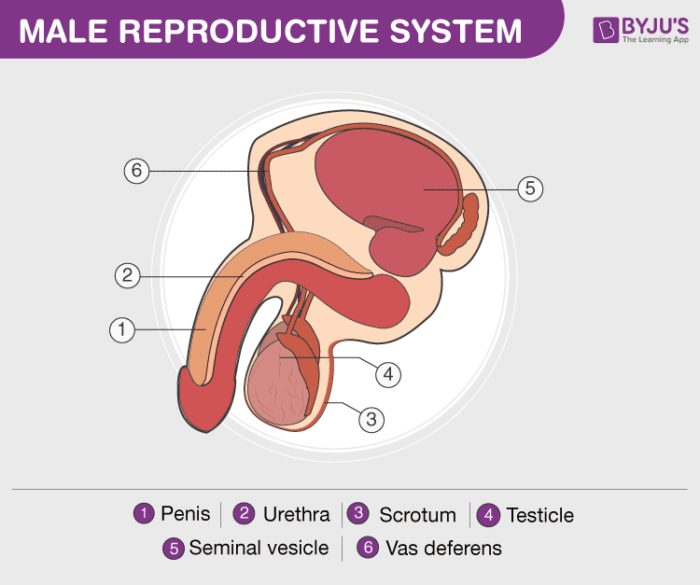
The male reproductive system consists of :
Testicles (testes): A pair of oval-shaped organs masked in a pouch called the scrotum. They are responsible for the production of sperms and the male hormone testosterone.
Scrotum: It is a sac-like organ that hangs below the penis and behind it. It is the houses of the testicles, or testes, and maintains a temperature that is required for the production of sperm by it.
Vas deferens: The sperms produced in testes are stored in a tube called the epididymis. Here the sperms get matured and pass to urethra through the muscular tube called vas deferens.
Accessory glands: This includes three glands, namely seminal vesicles, prostate gland, and Cowper’s gland. The secretions from the three glands mix to form a fluid called semen. Semen nourishes the sperm, increases the volume and helps in lubrication.
Penis: Penis is a cylindrical tube which serves as both reproductive organ and an excretory organ. It delivers sperms into the vagina during sexual intercourse.
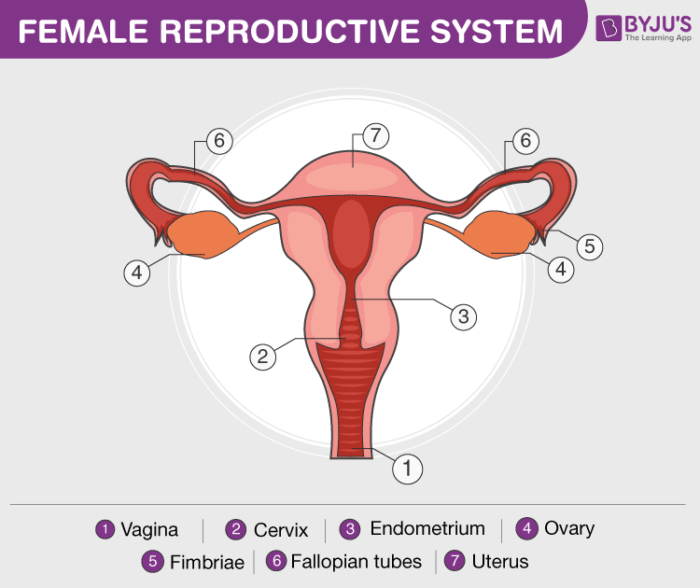
The female reproductive system is active before, during and after fertilization as well. It consists of the following parts:
A pair of ovaries: Ovaries produce and store ovum in them. They also produce a female hormone called estrogen.
Fallopian tubes (Oviducts): They are the site of fertilization. They connect ovaries with the uterus.
Uterus: Uterus is the site of development for the embryo.
Vagina: It is the part which connects the cervix to the external female body parts. It is the route for the penis during coitus as well as a fetus during delivery.
Female reproductive system has two functions –
Production of female gamete called ovum/egg.
Providing nutrition and protecting the developing embryo.
During puberty, eggs in the ovaries start to mature. One of the ovaries releases the matured ovum in every 28 to 30 days and is called ovulation
Reproduction Process in Human Beings
The process of fusion of sperm with egg (ovum) to produce zygote is called fertilization. Fertilization is a crucial stage of reproduction in human beings. The fertilized egg is called the zygote. Zygote starts to divide into many cells and develops into an embryo.
Embryo moves into the uterus and gets attached to its walls. This process is referred to as implantation, and the implanted embryo eventually develops into a fetus.
 Reproduction in organisms